
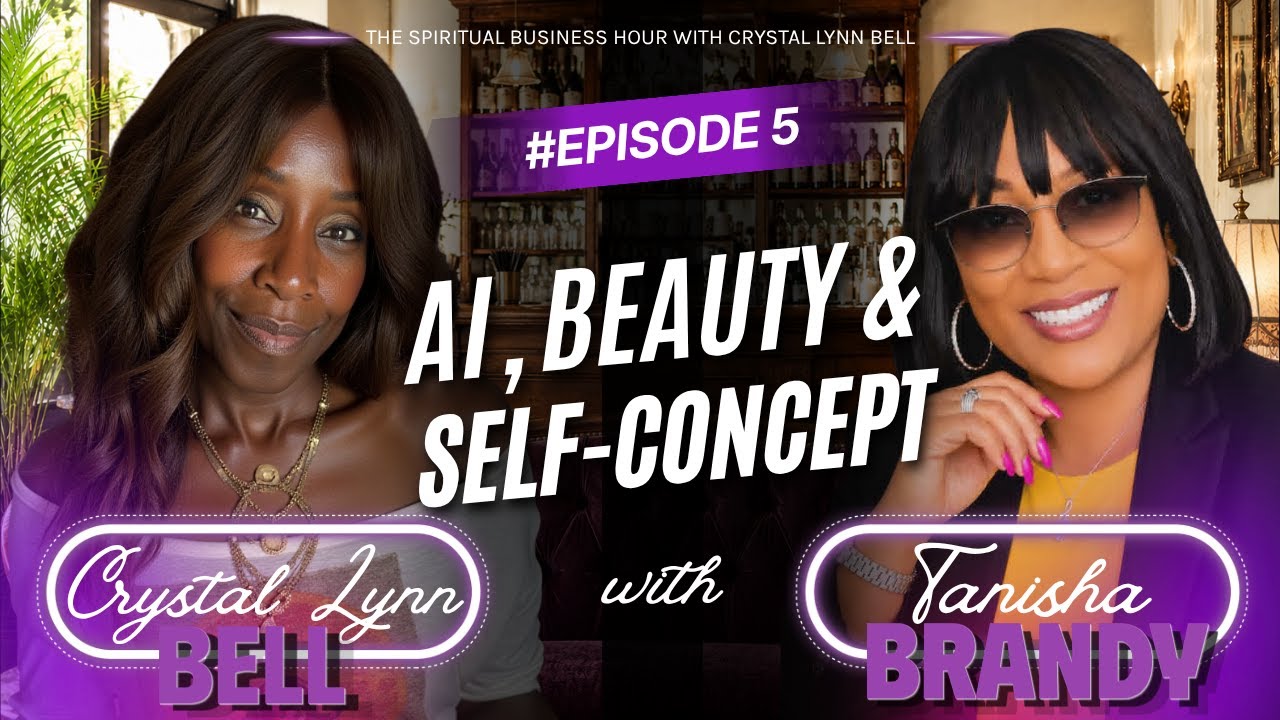
Beauty, Aging, and the Camera: How Women Coaches Over 40 Reclaim Their Presence on Video
By Crystal Lynn Bell
We explore why going on camera feels so unnatural for women coaches over 40, the conditioning behind that hesitation, and three practical shifts for reclaiming your presence on video without needing to perform.
Coaching used to be one of the few professions that never required a camera. Unless you were a news anchor or an actor, you built your entire career without ever having to look directly into a lens and speak. Now, if you want to build a coaching business, going live is not optional. That shift alone would be an adjustment for anyone, but for women of my generation, the ones whose only childhood camera weighed fifteen pounds and needed a VCR to play back, it is an entirely unfamiliar kind of visibility, and I think it deserves to be named honestly rather than brushed past.
Why This Moment Feels So Unfamiliar
I am fifty six, and I say that plainly because I have no control over it and no interest in pretending otherwise. What I do notice is that midlife brings a real and sacred period of confusion for women, less collagen, changing hormones, a body that no longer looks or feels the way it once did. Perimenopause has existed since the beginning of the human female body, and yet almost nobody was talking about it publicly until the last decade. I choose to see this stretch of life as a transformation rather than a decline, the same shift a caterpillar makes on its way to becoming a butterfly, even though the culture around us has been slow to catch up to that framing.
Add to that the pressure of a coaching business that now depends on visibility, and it makes sense that getting in front of a camera feels genuinely frightening. You are being asked to be seen in a way your career never required before, while also needing to build enough trust that someone will eventually pay you for your expertise. That is a real weight to carry, and it has nothing to do with your capability as a coach.
You Are Not Performing for Everyone
Here is something I want you to hold onto. You are not going live for the masses. You are going live for the one woman, or the two or three women, who need exactly what you have to say. Most of the people who are genuinely absorbing your message will never comment, react, or share, because plenty of thoughtful people simply do not trust the platforms enough to engage with them publicly. That does not mean they are not there. It means the value of your presence has almost nothing to do with the numbers the algorithm shows you.
I go live five days a week at the same time, not because a strategy told me to, but because the discipline itself has become a process of internal development. Before each session I write for twenty to thirty minutes, working out what I actually think until the message is clear in my own mind, and that habit alone has done more for my confidence on camera than any amount of waiting to feel ready ever could. You do not need to be entertaining. You need to show up consistently and say something true.
The Conditioning Underneath the Hesitation
Much of what makes the camera feel unbearable has very little to do with the camera itself. It is conditioning, built over decades of cultural messaging that told women their value declines as they age, and it lives in the body long before the conscious mind ever makes a decision about hitting record. That conditioning can show up as perfectionism, as obsessing over lighting and filters, as full paralysis before you have said a single word.
I will tell you mine plainly. My own mother told me for most of my life that I was ugly and unintelligent, and yet somehow, for reasons I still do not fully understand, I grew up believing I had permission to be in front of a camera regardless. That permission became a kind of freedom. It did not erase the conditioning entirely, but it meant the drive to do the work outweighed the old instinct to hide. I have since made real peace with how I look, and I no longer experience it as a question worth asking. The job simply needs to get done, and I get it done.
Three Ways to Reclaim Your Presence on Camera
The first shift is to stop treating the camera as a stage. It is not a performance. It is a conversation with one specific woman on the other side of the screen who needs exactly what you know. The coaches who genuinely hold attention are not the ones doing the most entertaining things. They are the ones who make that one viewer feel personally understood, because they are speaking directly to her situation rather than performing for an audience in the abstract.
The second shift is building an actual relationship with your own face. Most women over forty are encountering their camera face for what feels like the first time, and it can be genuinely disorienting, the same way hearing your recorded voice for the first time once was. Remember that the face in your mirror is two dimensional and reversed, and the face on camera is neither of those things, so the shock you feel is not a sign that something is wrong with you. I spend real time with my face every night, doing my skincare routine without judgment, simply getting used to what is actually there. That familiarity, built slowly and without pressure, is what eventually lets you show up on camera as someone who has already made peace with herself rather than someone meeting a stranger.
The third shift is learning to lead with your first three seconds. Viewers decide almost immediately whether to stay or scroll, and the way to earn those first few seconds is not through spectacle. It is through specificity. I open nearly every episode with a question, because a good question makes a person pause and think. Naming your ideal client's exact situation in that opening moment works the same way. People do not stay because you danced well. They stay because they felt seen.
Laugh at Yourself and Keep Going
My body has changed since I moved to California, and my face looks different than it did in photos I still have saved. I have learned to laugh at that rather than mourn it, because the alternative, holding myself to some impossible, unchanging standard, was never sustainable and never true to how bodies actually work. You are allowed to be human on camera. You are allowed to be imperfect, to move your hands too much, to notice your face looks different than you expected, and to keep going anyway. Give yourself real time to adjust, practice speaking to the camera before you ever go live, and let yourself find it genuinely funny rather than devastating. It gets easier with repetition, and the woman you are trying to reach is worth the discomfort of those first awkward sessions. You can watch the full episode here ▶️ **Watch video now**